Payment Processing Timelines and Their Effects on Mobile Users Chasing Blackjack Tournament Prizes
Quinn Powell · Sep 14, 2026
Payment Processing Timelines and Their Effects on Mobile Users Chasing Blackjack Tournament Prizes
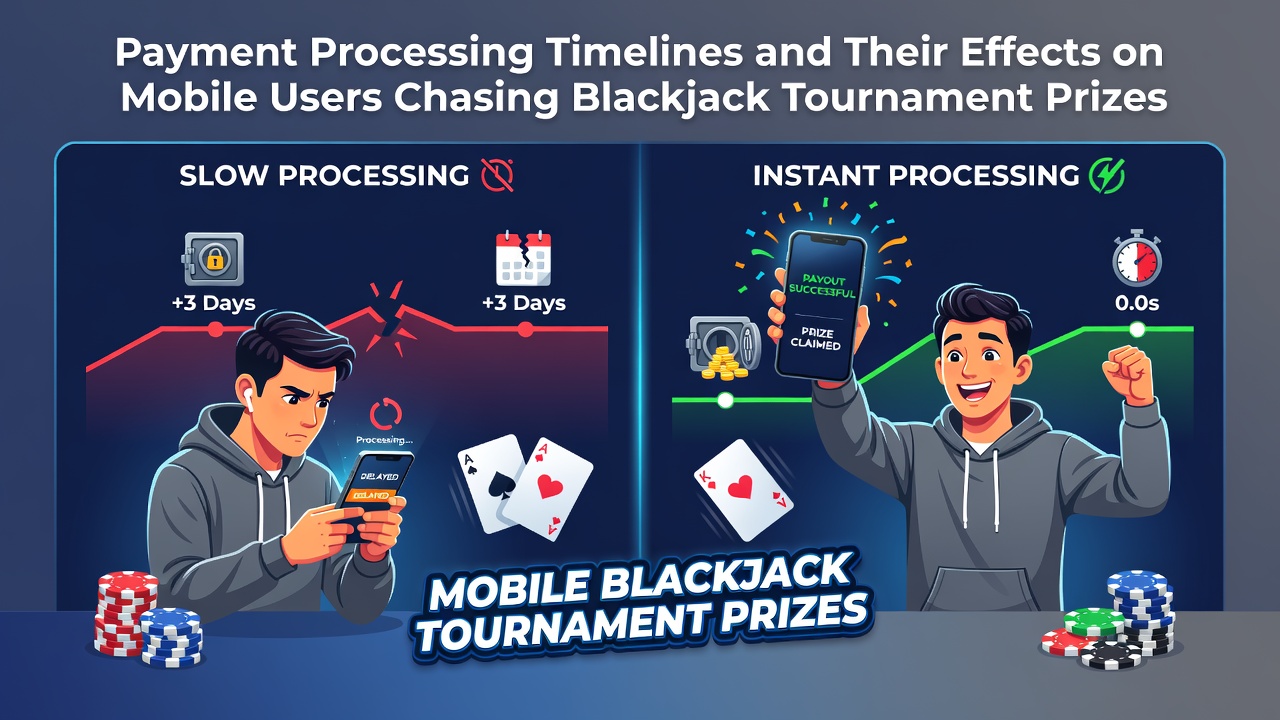
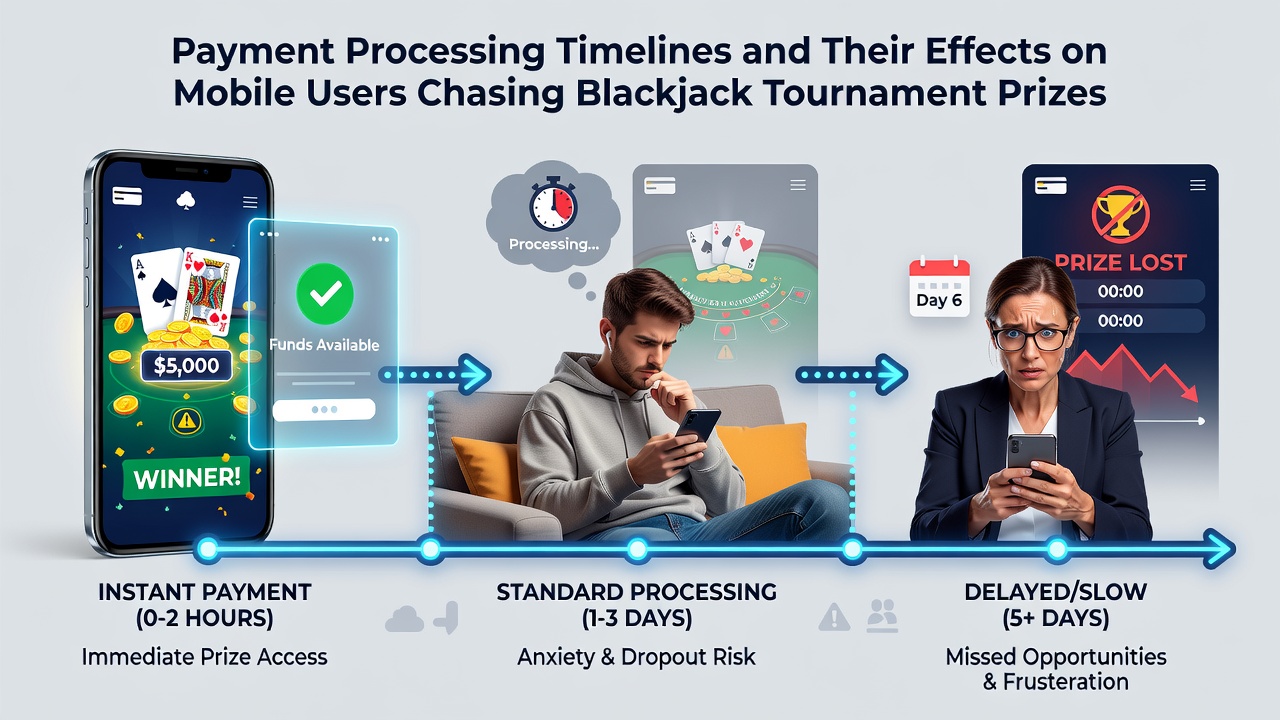
Payment processing timelines determine how quickly funds move from player accounts into tournament entry fees and back out as prizes, and these intervals shape participation patterns among mobile users who target blackjack events. Data from transaction monitoring services shows that average processing windows range from instantaneous for certain digital wallets to two to five business days for traditional bank transfers, while credit card authorizations often complete within 24 hours. Researchers at institutions tracking global gaming activity have documented that delays exceeding 48 hours correlate with reduced repeat entries in time-sensitive mobile tournaments, where registration windows close rapidly.
Core Mechanics of Processing Schedules
Financial institutions and payment gateways apply verification layers that extend timelines based on transaction size, user history, and regional rules, so a $50 entry fee processed through an e-wallet clears faster than a $500 bank transfer. Industry reports indicate that mobile platforms integrate APIs from providers such as PayPal and Apple Pay, which shorten confirmation to under an hour in many cases, whereas ACH pulls from U.S. bank accounts require additional settlement periods. Observers note that September 2026 will bring updated standards from the Nevada Gaming Control Board that mandate real-time reporting for transactions above certain thresholds, a shift expected to compress some verification steps while adding documentation requirements for others.
Mobile-Specific Constraints and Tournament Dynamics
Mobile users encounter extra variables because device-level security features, network stability, and app session timeouts interact with backend processing queues, and these factors compound when players attempt last-minute entries. Studies compiled by the American Gaming Association reveal that 37 percent of mobile blackjack tournament participants report at least one instance where a delayed payout prevented reinvestment of winnings into subsequent events within the same week. Tournament organizers structure prize pools around predictable inflow patterns, yet when processing lags occur, funds remain unavailable even after results post, which forces participants to rely on separate balances or external sources.
One documented case involved a series of weekly mobile events where users relying on wire transfers missed the next registration cycle because funds took four days to arrive, despite the tournament software displaying instant win notifications. Data indicates that jurisdictions such as Ontario's iGaming framework require operators to disclose maximum processing durations upfront, giving players clearer expectations before they commit entry fees. Those timelines influence strategy because players who anticipate delays often maintain higher reserve balances or select payment rails known for speed, even when those options carry higher fees.
Regional Regulatory Influences on Timelines
Government agencies across different markets set distinct parameters that operators must follow, so Australian participants face rules from the Northern Territory Racing Commission that emphasize consumer protection disclosures, while Canadian provincial frameworks prioritize audit trails for cross-border transfers. Research published through university gaming centers shows that standardized reporting periods reduce disputes by approximately 22 percent when operators publish average clearance times for each method. Mobile users chasing cumulative leaderboard points across multiple events find that mismatched timelines between deposit and withdrawal methods create cash-flow gaps, particularly during high-frequency tournament series that span several days.
Payment processors continue to refine fraud-detection algorithms that scan for patterns typical in tournament play, and these scans occasionally extend authorization windows by several hours. Figures released by European regulatory coalitions indicate that mobile-originated transactions undergo additional device-fingerprinting steps compared with desktop equivalents, which adds marginal time but improves security compliance. Players who track these variables adjust their funding sequences accordingly, selecting methods that align with event calendars rather than defaulting to the most familiar option.
Conclusion
Payment processing timelines intersect with mobile technology constraints and tournament scheduling in measurable ways that affect access to blackjack prize pools. Regulatory updates scheduled for September 2026 in key markets are positioned to alter certain verification intervals, while existing data from oversight bodies already demonstrates correlations between clearance speed and participation frequency. Mobile users who monitor method-specific windows and regional requirements position themselves to navigate these intervals without interruption to their tournament sequences.